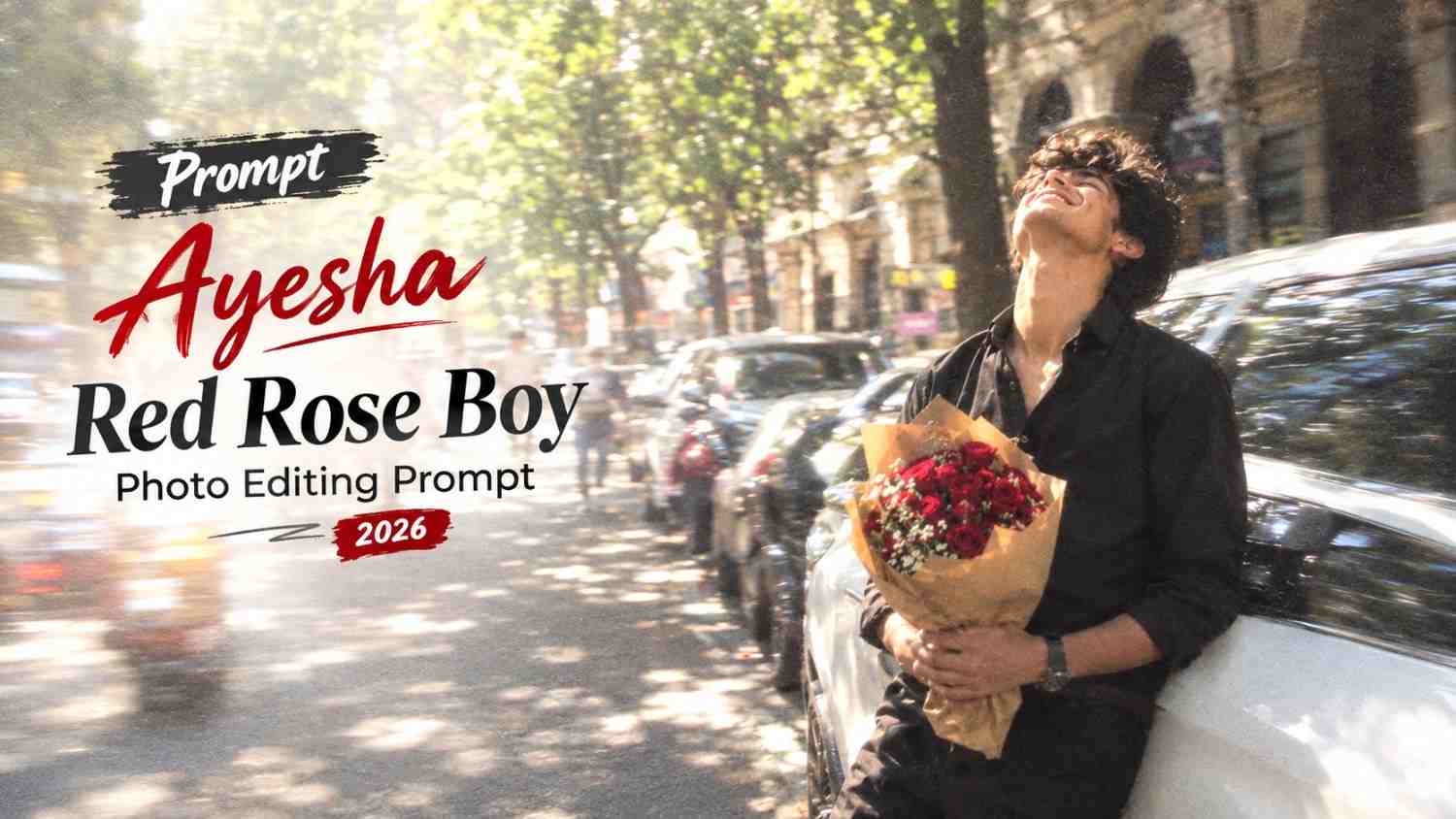
Want to create a natural-looking romantic street portrait with a vintage digital-camera feel? This Gemini prompt focuses on a young South Asian man holding a bouquet of deep red roses while standing beside a parked white car on a busy city street. The result is an image that feels like an unexpected, candid photograph rather than a perfectly posed studio portrait.
In this comprehensive guide, we will explore the exact prompt, explain why each element contributes to the authentic snapshot aesthetic, and share expert tips for achieving the most realistic and emotionally resonant results possible. Whether you are new to AI image generation or looking to refine your technique, this breakdown will help you understand how to create images that feel genuinely spontaneous and alive.
Understanding the Red Rose Boy Photo Concept
The central element of this photograph is the bouquet of deep red roses wrapped in brown kraft paper. The man holds the bouquet with both hands, making it immediately noticeable within the composition. The red roses serve as a visual anchor—they draw the eye and provide a splash of vibrant color against the more muted surroundings.
He wears a simple black shirt with black trousers, keeping the outfit minimal so the red roses stand out naturally. This deliberate simplicity in clothing is a key principle of candid photography: when the outfit is understated, the emotional content of the image takes center stage.
His pose is intentionally expressive. Rather than looking directly at the camera, he tilts his head far backward and faces the sunlight with his eyes tightly closed. His broad closed-mouth smile creates a carefree and genuinely happy feeling. This pose is unusual for a portrait—most people look at the camera—and that is precisely why it works. It feels real, unguarded, and spontaneous.
Why Candid Poses Feel More Authentic
Candid photography captures moments as they happen, without direction or staging. The backward head tilt and closed eyes suggest that the subject is lost in a moment of joy, perhaps laughing at something off-camera or simply enjoying the warmth of the sun on his face.
This type of pose is difficult to fake convincingly. When someone poses for a camera, their body language tends to become more controlled and less natural. By contrast, the pose described in this prompt—head thrown back, eyes closed, broad smile—is the kind of thing you might capture in a split-second during a genuine moment of happiness.
Candid Street Photography Style
The background features a busy tree-lined city street with parked cars and old building arches. These details help make the photograph feel like it was captured during an ordinary moment outdoors. The setting is not a glamorous location—it is a regular street, the kind of place anyone might walk past on any given day.
Bright midday sunlight creates dappled shadows across the surroundings. Some areas of the image can appear slightly overexposed, producing glowing highlights and a nostalgic photographic effect. This overexposure is not a flaw; it is a deliberate characteristic of the vintage digital-camera aesthetic.
The goal is not to create a perfectly clean fashion photograph. Instead, the image should retain small imperfections such as lens softness, smeared edges, motion blur and imperfect focus. These imperfections are what make the image feel real. A perfectly sharp, perfectly lit photograph often feels sterile and artificial, while an image with slight flaws feels human and relatable.
The Role of Environment in Storytelling
The busy street, parked cars, and old building arches provide context without distracting from the main subject. They tell the viewer that this is a real place, not a studio backdrop. The tree-lined street suggests a pleasant day, perhaps in spring or early summer, when the leaves are full and the sunlight is warm.
By keeping the background slightly softer than the subject, the image maintains focus on the man and the roses while still providing enough environmental detail to establish a sense of place.
The Exact Photo Editing Prompt
Use this prompt exactly as provided. Copy it without modification for the best results.
Ultra realistic candid street photo, vertical 9:16.
Young South Asian man, natural youthful masculine face wearing a simple black shirt, black trousers. He holds a bouquet of deep red roses wrapped in brown kraft paper with both hands.
Exact pose: standing beside a parked white car, body leaning slightly back, head tilted far backward, face lifted toward the sunlight, eyes tightly closed, broad joyful closed-mouth smile, carefree laughing expression.
Busy tree-lined city street, parked cars and old building arches in the background. Bright midday sunlight, dappled shadows, dreamy glowing highlights, soft overexposure, heavy motion blur, lens softness, smeared edges, low-resolution digital camera texture, intense film grain, faded muted colors, bloom, hazy glow, imperfect focus, authentic candid snapshot realism, no beauty filter, no AI look, natural skin texture, realistic imperfections.
How to Get the Candid Look
The biggest part of this AI prompt is the combination of the pose and camera imperfections. The subject should not appear to be deliberately posing for a professional photoshoot. Instead, he should look like someone who was captured mid-laugh, mid-movement, mid-life.
The backward head tilt, closed eyes and joyful expression should look spontaneous. At the same time, the hands and bouquet can have noticeable motion blur, giving the impression that the photograph was captured while the subject was moving. This motion blur is a crucial detail—it suggests that the moment was fleeting and that the camera caught it just in time.
The face should still retain realistic skin texture. Avoid excessive smoothing or artificial beauty effects because those can remove the natural snapshot appearance. Real skin has pores, subtle variations in tone, and tiny imperfections. By preserving these details, the image feels more like a genuine photograph and less like a digital creation.
Balancing Realism and Imperfection
The key to this aesthetic is balance. Too much imperfection and the image looks like a bad photograph. Too little and it looks artificial. The prompt guides the AI toward the sweet spot: an image that is technically imperfect but emotionally perfect.
This balance is achieved through specific instructions about motion blur, lens softness, film grain, and faded colors. Each of these elements contributes to the overall vintage feel, but none of them should overwhelm the image.
Vintage Digital Camera Aesthetic
The prompt uses several visual characteristics associated with older digital photography. Heavy film grain, faded colors, bloom, soft focus and low-resolution digital-camera texture can make the image feel nostalgic. Slight overexposure around the sunlight can further enhance the effect.
The background does not need to be perfectly sharp. Lens softness and smeared edges can help create the imperfect character of an authentic candid photograph. In real vintage digital cameras, the lens was often not perfectly sharp, especially at the edges of the frame.
However, the main subject should remain recognizable and visually connected to the environment. The imperfections should enhance the image, not obscure it. The viewer should still be able to see the man’s expression, the roses, and the setting clearly.
Why Nostalgia Resonates
Vintage aesthetics have become increasingly popular on social media platforms like Instagram and Pinterest. The faded colors, film grain, and soft focus evoke memories of a simpler time, before high-resolution smartphone cameras and heavily edited photos became the norm.
By incorporating these elements into your AI-generated image, you tap into that sense of nostalgia and create something that feels both familiar and emotionally resonant.
Why the Red Roses Stand Out
The deep red bouquet provides a strong visual contrast against the man’s black clothing and the lighter outdoor surroundings. Red is a color that naturally draws the eye, and against the muted tones of the street scene, it becomes even more striking.
Wrapping the flowers in brown kraft paper keeps the bouquet looking simple and realistic. It also prevents the image from becoming overly decorative. Kraft paper is associated with natural, handmade, and artisanal products—it suggests authenticity and simplicity.
The roses can remain slightly affected by motion blur while their overall shape and deep color stay recognizable. This subtle blur adds to the candid feel, suggesting that the bouquet is moving along with the man’s body.
Tips for a Better Result
If you’re recreating this style using your own reference image, consider these tips to maximize your chances of a successful result:
-
Use a clear reference photograph if identity consistency is important. The AI needs enough visual information to accurately reproduce the subject’s features.
-
Keep the outfit simple and dark. A black shirt and trousers provide a neutral canvas that allows the red roses to stand out.
-
Maintain the bouquet in both hands. This pose keeps the bouquet visible and central to the composition.
-
Preserve the backward head-tilt pose. This is the defining feature of the image—it communicates carefree joy.
-
Keep the eyes closed. Closed eyes add to the candid, spontaneous feel.
-
Use bright natural sunlight. Midday light creates strong shadows and glowing highlights.
-
Add realistic motion blur rather than excessive blur everywhere. The motion blur should primarily affect the hands and bouquet, not the face.
-
Keep the background slightly softer than the subject. This maintains focus on the man and the roses.
-
Avoid artificial skin smoothing. Natural skin texture is essential for authenticity.
-
Retain natural imperfections in the final photograph. Grain, softness, and slight overexposure are all part of the aesthetic.
-
Use a 9:16 vertical composition for mobile-friendly content.
Using ChatGPT for Similar Photo Ideas
A ChatGPT prompt can also be used to experiment with similar candid photography concepts. You can keep the same subject and pose while changing the location, flowers, outfit or time of day.
For example, the city street could be replaced with a quiet park, old marketplace or European-style street while maintaining the same vintage-camera aesthetic. Changing one visual element at a time is useful when you want to create multiple variations without completely changing the original concept.
This approach allows you to build a cohesive collection of images that share a consistent visual identity while offering variety in setting and mood.
Perfect for Social Media
The 9:16 format makes this type of portrait suitable for Instagram Stories, Reels covers, WhatsApp Status and other mobile-focused platforms. The vertical orientation fills the screen, creating a more immersive viewing experience.
The expressive pose also makes the image visually different from a standard standing portrait. The combination of sunlight, red roses and a carefree smile creates a strong candid photography theme that is likely to resonate with viewers.
You can also use the concept for romantic posts, birthday edits, rose-themed content or aesthetic portrait collections. The versatility of the concept makes it a valuable addition to any content creator’s toolkit.
Frequently Asked Questions
Q: Can I use this prompt with any AI image generator?
Yes, though results will vary by platform. The prompt is written as a detailed visual description, so it can be adapted to most modern AI image tools that support reference images and portrait generation.
Q: Why does the AI sometimes make the face look too smooth?
AI models tend to default to overly smooth, airbrushed skin. To counteract this, emphasize “natural skin texture” and “realistic imperfections” in your prompt. Regenerating the image often helps as well.
Q: Can I change the flowers from red roses to something else?
Absolutely. The red roses are part of the original concept, but you can adapt the prompt to describe any type of flower or bouquet that suits your preferences.
Q: What if the motion blur is too strong or affects the face?
Specify that motion blur should primarily affect the hands and bouquet, not the face. You can also add “sharp face” to the prompt to ensure the subject’s expression remains clear.
Final Thoughts
This red rose street portrait combines a simple black outfit, vibrant flowers, bright sunlight and an intentionally imperfect camera aesthetic. The unusual backward pose and joyful expression make the photograph feel like a spontaneous moment rather than a carefully arranged photoshoot.
For more creative photo-editing ideas, Prompt Ayesha features different prompt concepts that can be adapted to portraits, couple photos, traditional looks, street photography and other visual styles.
The key to this particular effect is maintaining the balance between realism and imperfection. Natural skin texture, believable lighting, subtle background detail and controlled motion blur can help the final image retain the feeling of an authentic candid photograph.
Did you find this guide helpful? Share it with someone who might benefit from it. Have questions or want to share your results? Leave a comment below and join the conversation!